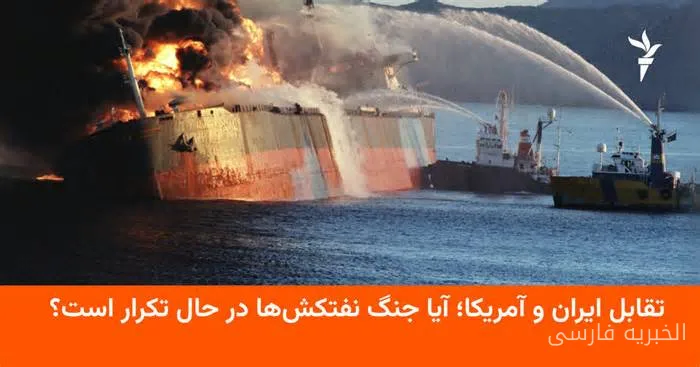
The confrontation between Iran and the US in the Persian Gulf has intensified with reciprocal attacks on tankers and warships. For many Iranians, these clashes remind them of the final years of the Iran-Iraq War and the conflicts known as the 'Tanker War.'
Reciprocal Attacks and Rising Tensions
On September 5, the US military targeted three Iranian tankers. This action came after the Islamic Revolutionary Guard Corps fired missiles at two US warships. Iran's response was swift, with the IRGC announcing that it had targeted three tankers and three vessels associated with the US. A few days later, the United States attacked five more Iranian tankers, and Tehran announced that it had targeted ten vessels in the region as well as a US base in Jordan.
Read more: Opposition parties in Sweden seek to halt the trend towards right-wing extremism
Historical Reminder
These reciprocal attacks remind us of events from the 60s in the Iranian calendar and the tanker war. At that time, Iran attacked commercial ships from Iraq and the Arab countries supporting it, leading to the entry of American forces into the region and the emergence of maritime tensions. Now, with the increase in attacks, concerns about escalating tensions in the Persian Gulf and their impact on the energy infrastructure of other countries have grown.
Mohammad Qaeedi, a political science lecturer at George Washington University, believes that Iran's logic during this period is very similar to its calculations at that time. He states, "Iran wants to convey the message that if it cannot export its oil, other countries should also face restrictions."
Mohammad Farsi, a former commander of the Iranian Navy, also believes that the intensification of these conflicts is reminiscent of the tanker war period and assesses the current situation as dangerous. He emphasizes that Iran still has the capability to attack oil tankers and US warships.
This situation clearly indicates that concerns about the rapid transfer of these tensions to US bases in the region and the energy infrastructure of other countries are increasing. Ultimately, these conflicts will not only impact the global oil market but could also lead to the emergence of a larger tension in the region.
Read more: Al-Alimi emphasized the need for cohesion after the expansion of the Houthis in western Yemen · Iran's meeting with Arab countries postponed at Saudi Arabia's request