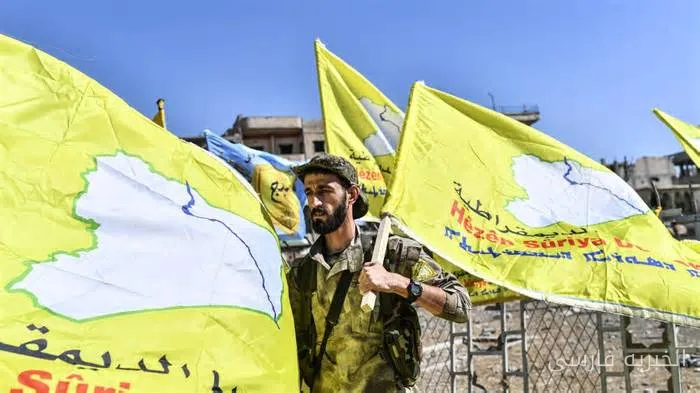
The dissolution of the Syrian Democratic Forces on August 25, 2026, marks the end of a military structure that has been the main pillar of Kurdish self-governance in northeastern Syria for the past 14 years; however, the integration of military forces and civilian institutions in this region into the structure of the Syrian government has not yet been completed, and the future of Kurdish rights remains faced with significant ambiguities.
Developments and Integration Challenges
The dissolution of the Syrian Democratic Forces has occurred following an agreement between these forces and the Damascus government and the advancement of the integration process. Mazloum Abdi, the commander-in-chief of the Syrian Democratic Forces, is set to serve as a special advisor to Ahmad al-Shara, the President of Syria. Additionally, several senior leaders of these forces will take on responsibilities within government structures. Despite the official announcement of dissolution, some experts believe this development is more symbolic than indicative of an immediate end to existing structures.
The Fate of Women's Defense Units
One of the most pressing unresolved issues is the fate of the women's defense units. Mazloum Abdi had announced that the military forces of the Syrian Democratic Forces have been fully integrated into the Ministry of Defense, but the women's defense units were not included in this process. Following the announcement of dissolution, the women's defense units stated that the possibility of integrating this force as an organized and independent entity within the Ministry of Interior is under discussion. The status of this unit could impact the region's future security.
Cultural and Social Challenges
The future of the Kurdish language in the educational system of northeastern Syria is another major challenge. Many Kurds are concerned about a return to the conditions that existed before 2012. Ahmad al-Shara announced in January that the Kurdish language would be recognized as a "national language," but this decision does not mean that the Kurdish language will become Syria's official language. The status of Kurdish language education after the transitional period remains unclear.
The developments in Syria are also linked to the peace process between Turkey and the Kurdistan Workers' Party. Turkey considers the Syrian Democratic Forces to be the Syrian branch of the PKK, and experts believe that this situation could have profound effects on Kurds in Turkey.
On a social level, integration faces serious obstacles. The Syrian government is trying to consolidate its control over northeastern Syria while simultaneously reducing Kurdish concerns and distrust towards the new government. The return of displaced Kurds to areas predominantly populated by Arabs and vice versa could lead to new tensions.
Read more: New Zealand's Foreign Minister expressed concern over the increase in violence by occupiers and the expansion of illegal Israeli settlements in the West Bank · Meeting of the Turkish Foreign Minister with the President of Syria in Damascus