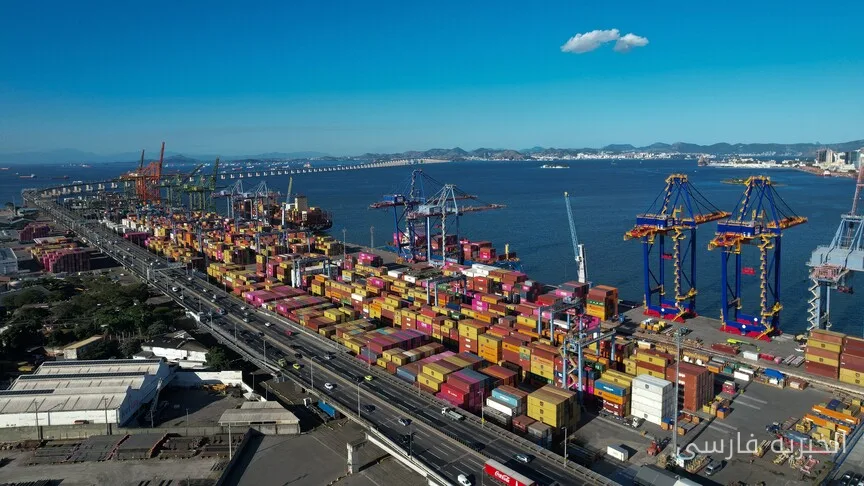
The World Trade Organization (WTO) warned in a report published on Tuesday about the geographical fragmentation of the global trading system into aligned blocs. The organization has predicted that such a situation could reduce global gross domestic product (GDP) by up to 5.1 percent and global exports by up to 18.6 percent.
Various Scenarios and Their Consequences
The report also referenced a worse scenario in which a complete collapse of multilateral cooperation would replace the WTO with a disordered network of bilateral trade agreements. In this case, global GDP would decrease by 6.9 percent and global exports by 26.9 percent.
Read more: The Decline of the Chinese Yuan Against the Dollar and Stability in Stock Markets
Strengthening Multilateral Cooperation
Conversely, strengthening multilateral trade cooperation could increase global production by up to 2.9 percent and expand global exports by up to 17.9 percent. These points were raised by Ngozi Okonjo-Iweala, the Director-General of the World Trade Organization, who emphasized the critical state of global trade over the past 80 years.
Okonjo-Iweala noted that approximately 72 percent of global goods trade still operates under the conditions of the most favored nation tariffs, while this figure was around 80 percent in 2022. This decline reflects increasing pressures on non-discriminatory rules in global trade.
Trade and Economic Growth
The report also emphasized that integration into the multilateral trading system since 1995 has led to a 140 percent increase in trade among members and has brought about faster economic growth in low- and middle-income countries. However, these benefits have been distributed unevenly, with less developed countries holding less than 1 percent of global trade and their trade costs in manufacturing and services being 50 percent higher than those of high-income countries.
The Future of Global Trade
Looking ahead, it appears that new technologies such as artificial intelligence could increase global trade by up to 40 percent by 2040 and add more than 13 percent to global GDP in the next 15 years, particularly in the area of services that can be delivered digitally.
Read more: Japanese Government Bond Yields Reach Highest Historical Level · Houthi Advances and Their Impact on Oil Prices and Global Trade