Syria is facing serious economic and social challenges following the overthrow of Bashar al-Assad's regime. One of the most important narratives presented in the media is that Damascus can overcome economic pressures by normalizing relations with the United States and the Zionist regime. However, with the sharp rise in fuel prices and widespread protests, this narrative has been challenged.
Rising Fuel Prices and Public Protests
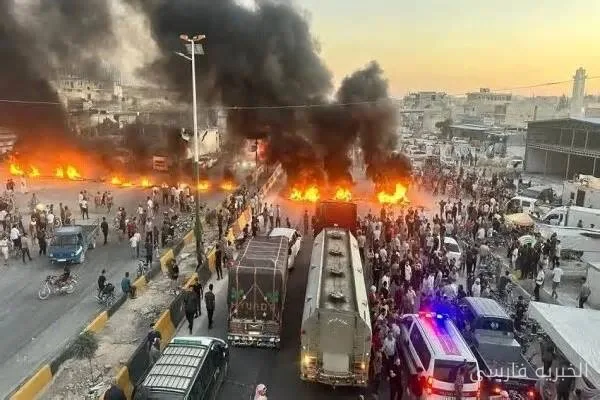
The increase in fuel prices in Syria, especially the price of diesel which has risen by 40% to 175 lira, equivalent to $1.32 per liter, has led to widespread protests in the country. Protesters expressed their anger towards the economic conditions by blocking roads and burning tires. These protests took place in eight cities and provinces in Syria, including Aleppo, Idlib, and Daraa, intensifying concerns about rising transportation and food prices.
Read more: Fire After Explosion at Salt Factory in Mexico
Economic Factors and Livelihood Pressures
Studies show that 90% of the Syrian population lives below the poverty line, and rising prices have put additional pressure on their daily lives. While the poverty rate before the civil war in 2011 was about one-third of the population, conditions have now become much more difficult. According to economic experts, this price increase is not only related to global market conditions but also requires attention to specific internal conditions and the performance of the Julani regime.
Bassam al-Ali, one of the protesters, told the Julani regime that people can no longer endure the current conditions and only seek a better life. Additionally, Yasser al-Najjar, a political researcher, pointed out that there is no justification for these price increases and the regime should have created a better groundwork for the acceptance of these changes by the people.
Foreign Interventions and the Risk of Fragmentation
In addition to economic problems, Syria is also facing increasing foreign interventions. Attacks by the Zionist regime continue unabated, and new areas in southern Syria have come under occupation. This situation has created the risk of Syria's fragmentation and raised serious concerns about the future of the country.
The current developments in Syria can be seen as more than just economic dissatisfaction. These protests serve as a test for the narrative of normalization against welfare, and Syria's experience has raised serious questions about the credibility of this narrative. As people seek to improve their lives, political and economic changes have not only failed to improve the situation but have also led to greater poverty and instability.
Read more: Greg Stanton: Border Crossing Payments Enter a New Phase · Russia Sent Military Equipment to Its Bases in Syria