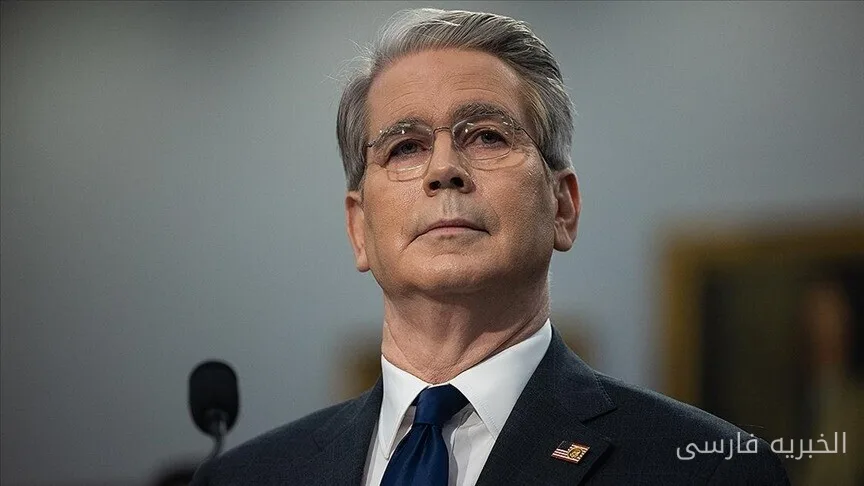
U.S. Treasury Secretary, Scott Busent, in his speech at a House Financial Services Committee meeting, stated that Washington is executing what he called the "largest economic isolation campaign" against the Islamic Republic of Iran and its supporters. Busent noted that economic pressures on Iran have had increasing impacts on the country's economy.
Critical State of Iran's Economy
Busent pointed out in his remarks that the economic power of the United States has allowed it to implement the "largest economic isolation campaign in history" against the Islamic Republic of Iran and its supporters. He also stated that President Donald Trump has taken actions against Iran that previous administrations had avoided.
Read more: European stocks drop under pressure from bank losses and rising oil prices
He said: "Under his leadership, America is no longer managing the Iranian threat; we are ending it." Scott Busent emphasized that the economic power of the United States allows it to exert pressure "from a position of strength."
Factors of Economic Pressure
The U.S. Treasury Secretary described Iran's economic situation as "critical" and referred to the devaluation of the national currency, severe price increases, and long lines for gasoline. Busent stated: "We have witnessed a sharp decline in the value of the currency and unprecedented inflation," adding that Iranians wait in lines of three to four hours to obtain gasoline as the country is forced to import fuel.
Busent attributed the economic pressure on Iran to a combination of the U.S. economic blockade and "economic expulsion operations," which is a Treasury campaign that began in August aimed at targeting financial communications and entities accused of helping Tehran evade U.S. sanctions.
The Treasury launched the economic expulsion operations on August 24, aiming to cut off the financial channels used by Iran for selling oil, evading sanctions, and generating revenue.
Busent also mentioned that Washington intends to intensify its actions against entities accused of facilitating trade with Iran and helping Tehran evade sanctions. He stated that these actions will begin on September 23 and will be fully implemented.
He emphasized: "We know, for those facilitating the regime, you know who you are, we know you too," adding that the Treasury will vigorously use its sanctioning powers.
Busent also referred to actions that the United Arab Emirates has announced to reduce financial and commercial transactions with Iran, stating that the Treasury has sanctioned a branch of an Egyptian bank in Dubai that has transferred over $1.8 billion to Iran since 2025.
He added: "With China, we have had very good private discussions" and expects these negotiations to continue during his meeting with Chinese Vice Minister, Liao Min, this weekend and also during the official visit of Chinese President, Xi Jinping, in the spring.
Read more: Eurozone bond yields reach the highest level in 17 years · Intensifying geopolitical and economic pressures on Saudi Arabia and Mohammed bin Salman