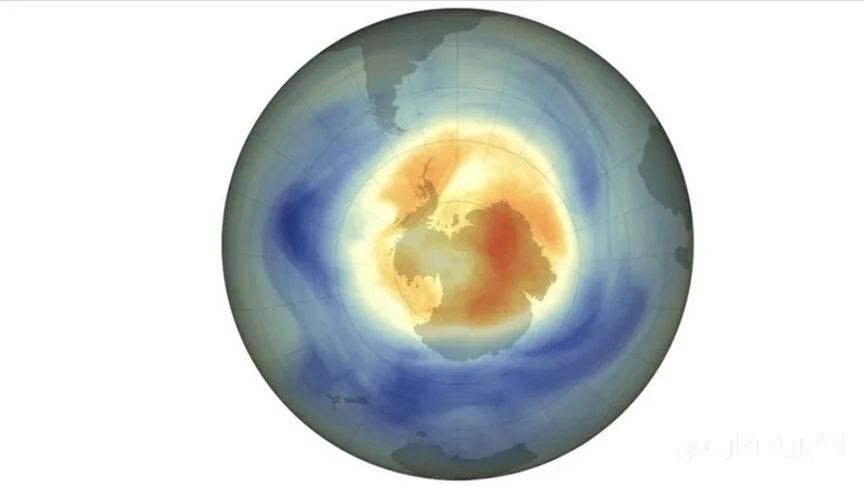
The ozone hole over Antarctica expanded rapidly in early September, reaching about 25 million square kilometers (9.6 million square miles), which is about 5 million square kilometers (1.8 million square miles) more than the average for the period. This information was released by the Copernicus Atmosphere Monitoring Service.
Trend of Ozone Hole Expansion
According to this service, the ozone hole has been developing at a normal rate since the second half of August, consistent with patterns observed over the past 46 years. However, in the first half of September, the area expanded significantly, and forecasts suggest it may continue to grow through mid-September.
Read more: Eruption of Semeru Volcano in Indonesia with Three Explosions
Reasons for Rapid Increase of the Ozone Hole
The Copernicus service attributed the rapid growth of the ozone hole to a sudden drop in temperature about 20 kilometers (12.4 miles) above Antarctica, which creates conditions for the formation of polar stratospheric clouds. These clouds contribute to the chemical destruction of ozone during the Southern Hemisphere spring, between August and November, as they activate halogens with sunlight.
Despite the rapid increase in the area of the hole, other monitored indicators by this service, including the minimum ozone amount within the ozone hole area and the ozone mass deficit, have remained at levels close to the historical average.
Importance of the Ozone Layer
The ozone layer protects life on Earth from harmful ultraviolet radiation and absorbs a significant portion of it. Emissions of greenhouse gases from human activities have led to a substantial reduction of this layer in recent decades, resulting in increased ultraviolet radiation levels.
The ozone hole over Antarctica is particularly visible due to the presence of a stable polar vortex and stratospheric winds in the region, associated with cold conditions linked to ozone depletion. The ozone hole typically forms over Antarctica in the Southern Hemisphere spring and gradually changes with shifting weather conditions.
The largest recorded ozone hole over Antarctica occurred in 2006, covering an area of 29.6 million square kilometers (11.4 million square miles).
Read more: Egypt's Meteorological Authority: Temperature Increase on Wednesday and Thursday · Fire on a Ship in the Strait of Hormuz: Situation is Concerning