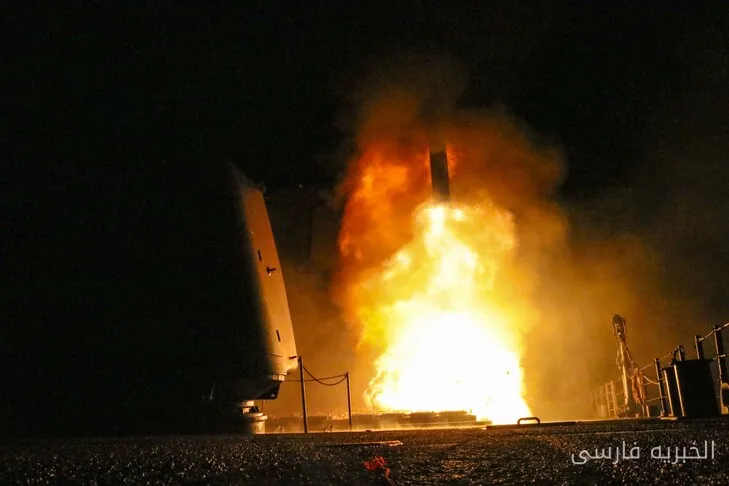
The new Pentagon inspection report on the impact of the U.S. war against Iran shows that ammunition consumed during these four months has created "strategic" shortages in ammunition stocks and caused issues in the capability of the U.S. weapons supply chain.
Details of the Inspection Report
This report, covering the period from April 1 to June 30 and prepared by the Office of the Inspector General overseeing "Epic Fury" operations, cites the Office of the Under Secretary of Defense for Acquisition and Sustainment stating that ammunition consumption "has led to strategic shortages and indicates problems in the industrial supply chain for ammunition."
Read more: Satellite images of damage to Saudi fuel facilities and military site following Houthi attacks
Pentagon Actions to Address Shortages
To address these shortages, the report notes that the Pentagon is working to streamline procurement processes and production timelines, as well as stockpiling materials, components, and selected ammunition for rapid response to any emergency situation. Additionally, the report emphasizes the need for the defense supply chain to have "significant lead time" to expand production capacities.
The report also mentions ongoing issues in the production of solid rocket motors, access to high-quality explosives, and hiring skilled workers in the manufacturing sector. These have been identified as major barriers to meeting U.S. military needs.
War Costs and Impact on Military Forces
According to estimates, the total cost of the war with Iran as of June 29 amounts to $33.4 billion, which includes $22.3 billion for ammunition consumption and $3.7 billion for equipment losses. The costs of repairing infrastructure are not included in this estimate.
U.S. Secretary of Defense, Pete Hegseth, informed Congress on July 21 that without additional funding, the Pentagon may face "critical shortages" that threaten its ability to pay service members, replenish certain equipment and ammunition, and maintain its global operations.
On June 24, the White House submitted a request for $87.6 billion in emergency funding to Congress, which includes $67.1 billion for the Pentagon and $21 billion for ammunition.
During the U.S. and Israeli war against Iran, seven U.S. service members were killed in operations, and seven others died in indirect incidents between February 28 and June 30. Additionally, 417 were injured. The report also notes that four more were killed in operations in July.
Read more: Khalil Abdullah: 104 days detained in the United States for supporting Gaza · Schools occupied by military forces; the school year is at risk!