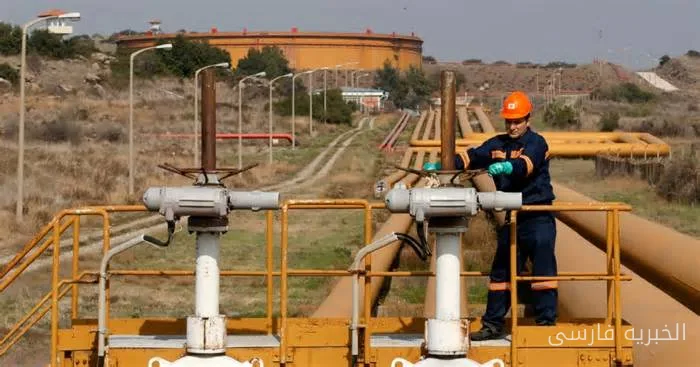
Bassem Mohammed Khazir, Iraq's Oil Minister, announced on Tuesday the launch of four strategic energy projects that will be developed in cooperation with French companies. This initiative is part of Baghdad's efforts to reduce dependence on Iranian energy and the route through the Strait of Hormuz.
Details of the New Projects
The Iraqi Oil Minister stated in an interview with Al-Iraqiya Network that these projects include the development of the Artawi field with a capacity of 210,000 barrels of oil per day, the utilization of gas from five fields with a capacity of 600 million cubic feet per day, seawater injection to compensate for reservoir pressure decline, and the use of solar energy with a capacity of 1,000 megawatts.
Read more: Abdulaziz bin Salman: Saudi Arabia a Reliable Energy Source Globally
French company Total is currently working in the Artawi field and will play a significant role in these projects.
New Contracts and International Negotiations
Iraq also signed energy contracts worth $200 billion in Washington this July, led by Prime Minister Ali Al-Zaydi. In this context, Chevron has taken on the responsibility for the operation of the West Qurna 2 field and the development of the Nasiriyah and Balad fields, replacing the Russian company Lukoil, which is under sanctions.
Halliburton is also managing the integrated fields of Bin Umar and Sindbad, while HKN Energy will develop the Hamrin field. Subsequently, Al-Zaydi met in Houston with Darren W. Woods, CEO of ExxonMobil, and called for an expansion of the company's role in Iraq's energy chain. Iraq's declared goal is to end imports from Iran by 2028.
Iraq and Syria have also signed an agreement to reconstruct the abandoned pipeline from Kirkuk to the port of Baniyas in the Mediterranean, which will be executed by Chevron. Baghdad is simultaneously negotiating with Ankara to extend the Kirkuk-Jehan pipeline agreement.
Considering that gas imports from Iran used to supply 30 to 40 percent of Iraq's electricity production before the war, Iraq aims to end the flaring of associated gas by 2029 and reduce its dependence on gas imports.
As the second-largest OPEC producer, Iraq is also a customer of Iranian electricity and gas. Since 2018, Washington has granted Baghdad sanctions waivers to allow the country to continue purchasing electricity and gas from Iran.
Read more: Qatar Energy Pursuing LNG Contracts with the U.S. Until 2031 · Iraq Invites Egyptian Companies to Participate in Housing and Infrastructure Projects