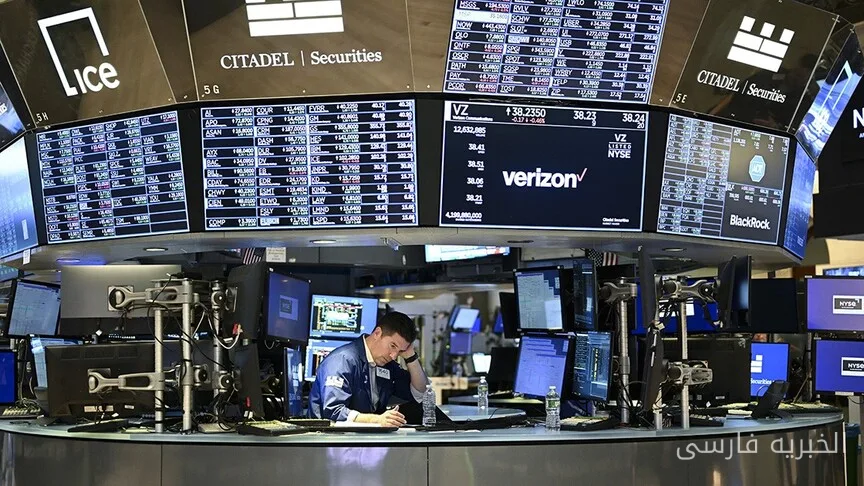
Global markets have declined due to intense selling pressure in the bond market, uncertainty regarding companies active in artificial intelligence, and ongoing tensions in the Middle East. Investors are cautiously approaching central bank interest rate decisions, while tensions in the Middle East have kept oil prices and bond yields elevated.
Impact of Yemeni Attacks on Oil Prices
Iran-backed Houthis recently launched an attack on Saudi Arabia, raising concerns about oil supply and pushing Brent crude prices for November delivery up by 1.7% to $107.4 per barrel. U.S. President Donald Trump has stated that oil prices will decrease when tensions with Iran come to an end.
Read more: Establishment of food prices in markets following field monitoring
Rising Bond Yields and Their Impact on Monetary Policies
The yield on the 10-year U.S. Treasury bond has reached its highest level since July 2007, at 5.03%. This increase is due to the rapid rise in oil prices, which has intensified concerns about the potential permanence of inflation. The U.S. Federal Reserve is likely to tighten its monetary policies to combat inflation. The two-day policy meeting of the Fed begins on Tuesday, and the market has a high level of confidence in an interest rate hike. The Fed last raised rates in July 2023.
The U.S. dollar rose by 0.1% on Tuesday to 99.6, while gold prices also increased by 0.1% to $4,305 per ounce, despite the rise in the dollar index, oil prices, and bond yields. Meanwhile, calls for a slowdown in artificial intelligence development continue to affect market direction.
Uncertainty remains regarding whether companies involved in artificial intelligence will collaborate to slow the development of this technology, due to intense competition between the U.S. and China. Trump has labeled claims that artificial intelligence will spiral out of control as "a trick."
The U.S. Treasury has added Russia's VTB Bank to its sanctions list for evading sanctions under Washington's economic operations. The New York Stock Exchange declined on Monday due to concerns about a slowdown in artificial intelligence development, which impacted chipmaker stocks.
Shares of Nvidia, AMD, Broadcom, Intel, and Marvell Technology fell by 3.4%, 4.4%, 4.8%, 5.6%, and 7.3%, respectively. Additionally, the Dow Jones Industrial Average fell by 0.29%, the S&P 500 by 0.48%, and the Nasdaq by 0.56%, with U.S. indices starting Tuesday on a negative trend.
Meanwhile, European stock markets, except for the UK, traded negatively, as rising oil prices reduced risk appetite and accelerated declines in technology stocks. Shares of Dutch technology company ASML fell by 6.1%, and shares of German company Infineon Technologies fell by 7.7%.
Analysts believe that the impact of calls for a slowdown in artificial intelligence development in Europe may be less than in the U.S. and Asia. Mining stocks fell due to declining copper prices in the region, while the UK stock market did not follow the regional trend due to support from energy stocks driven by rising oil prices.
The yield on Germany's 10-year bonds has reached its highest level since 2009, at 3.55%. On Monday, Italy's FTSE MIB fell by 1.68%, France's CAC 40 by 0.76%, and Germany's DAX 40 by 0.5%, while the UK's FTSE 100 rose by 0.44%. European indices started Tuesday in a negative state.
By the end of Monday, Asian stock markets also declined following other regions. China's retail sales in August increased by 0.4% year-on-year, which was below estimates, while investment in fixed assets fell by 7.2%, worse than expectations. China's unemployment rate stood at 5.3%, above estimates, while industrial production in the country rose by 5.2% in August.
These macroeconomic developments may intensify pressures on Beijing to provide more financial support and highlight ongoing challenges for China's economy. By the end of Monday, South Korea's Kospi fell by 0.6%, Hong Kong's Hang Seng by 0.2%, China's Shanghai Composite by 0.1%, and Japan's Nikkei 225 by 0.1%.
Read more: Egypt and Thailand to explore strengthening economic, investment, and trade relations · Donald Trump's efforts to build more refineries will not affect gasoline price reduction