The right-wing Alternative for Germany (AfD) has achieved 30 percent support in a national poll for the first time, surpassing the Christian Democratic Union, led by Friedrich Merz, by a margin of 10 percent.
Decline in Support for the Christian Democratic Union
The Christian Democratic Union and its sister party, the Christian Social Union in Bavaria, have dropped to 20 percent, the lowest level recorded by the GMS poll for these parties. The poll indicates that if elections were held this week, Merz's coalition, with 11 percent support from the Social Democratic Party, would not be able to form a majority in parliament.
Read more: German Defense Minister announces expansion of the country's intelligence fleet
Increase in Support for the Alternative Party and Other Parties
The Alternative for Germany has increased by 2 percent since the previous poll in late July, while the Christian Democratic Union/Christian Social Union has decreased by 3 percent. The Greens have increased by 1 percent to reach 14 percent. The Left Party has also increased by 1 percent to 11 percent. In contrast, the Free Democrats have decreased to 4 percent, and the Sahra Wagenknecht coalition is at 3 percent, both below the 5 percent needed to enter parliament.
These figures indicate significant changes compared to the federal elections on February 23, 2025, where Merz's conservative coalition won with 28.5 percent and the Alternative Party received 20.8 percent.
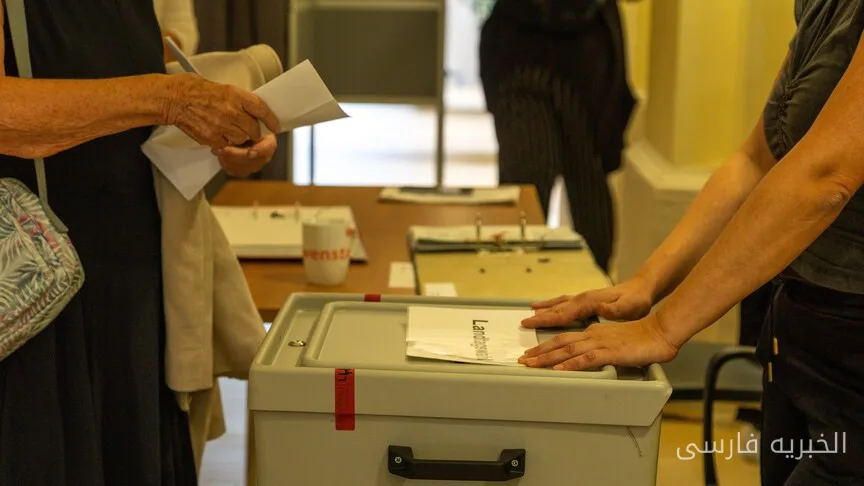
The recent poll was conducted ahead of regional elections in Mecklenburg-Vorpommern and Berlin on Sunday. These elections are seen as a test for Merz's political future following the heavy defeat of conservatives in Saxony-Anhalt, where the right-wing party garnered 43.8 percent of the votes on September 6.
In recent weeks, speculation about a potential change in chancellors has increased in the media, with North Rhine-Westphalia's Prime Minister, Hendrik Wüst (CDU), being mentioned as a possible successor. A leadership battle in the Christian Democratic Union after the state elections may not in itself dissolve the parliament or lead to early elections. If party pressures force Merz to resign, the parliament could elect a new chancellor without a national vote.
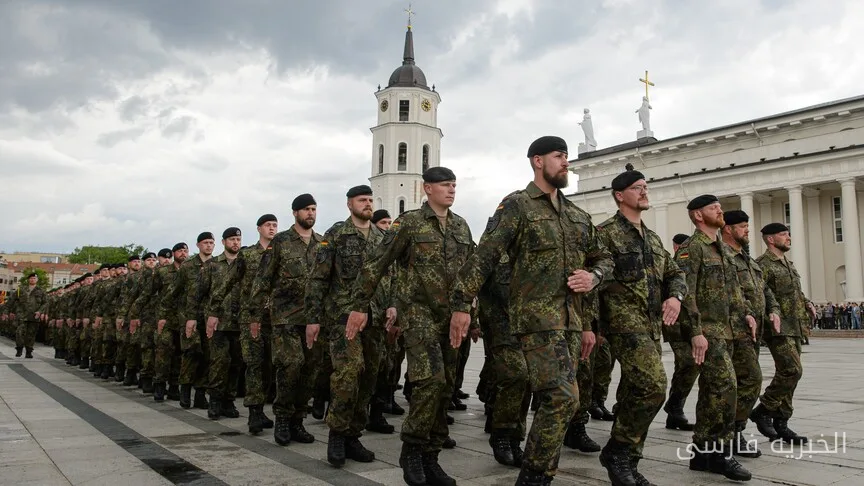
Read more: German Defense Minister Boris Pistorius ordered the deployment of forces to Lithuania · Has Friedrich Merz ruined the last chance for democracy?