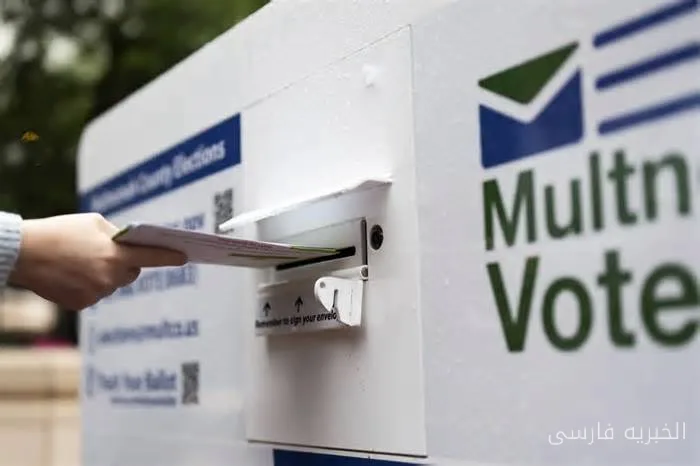
The U.S. Supreme Court, in a significant ruling, temporarily rejected the restrictions imposed by President Donald Trump on mail-in voting. This ruling will have a substantial impact on the upcoming elections and the use of mail-in voting.
History of the Restrictions
The restrictions that the Trump administration imposed on mail-in voting were implemented to prevent what he termed election fraud. These restrictions included new requirements for voter identity verification and limiting the time for submitting ballots. Critics viewed these measures as an attempt to reduce voter participation, especially among vulnerable populations.
Read more: Separatist parties in Scotland, Wales, and Northern Ireland hold joint talks
Legal Consequences
The U.S. Supreme Court's decision follows a series of multiple legal challenges that had been filed against these restrictions. While some states independently moved to conduct elections with mail-in voting, others faced concerns over the consequences of these restrictions. Now, with this decision, states can continue to use mail-in voting and encourage voters to utilize this method as a safe option.
This decision reassures many voters that they can submit their ballots easily without fear of new restrictions. Additionally, this action could lead to an increase in voter turnout, as mail-in voting is recognized as a convenient option for individuals who cannot visit polling places on Election Day for various reasons.
Political Implications
The Supreme Court's decision could have significant political implications. In the run-up to the elections, this ruling may benefit the Democratic Party, which primarily emphasizes mail-in voting. On the other hand, Republicans may attempt to use this decision to pressure public opinion against mail-in voting and generally against Democrats.
Given this decision, further discussions regarding the security of mail-in voting and its implementation in various states are expected to continue. While some states seek to increase access to voting, others may attempt to impose more restrictions on this process.
Ultimately, this Supreme Court ruling not only affects the current election process but could also influence future policies regarding voting and public participation.
Read more: Lebanese official: Israeli attacks in southern Lebanon go beyond Hezbollah's infrastructure · Trump administration at 25 years of September 11: Reposting controversial video of January 6 rioters