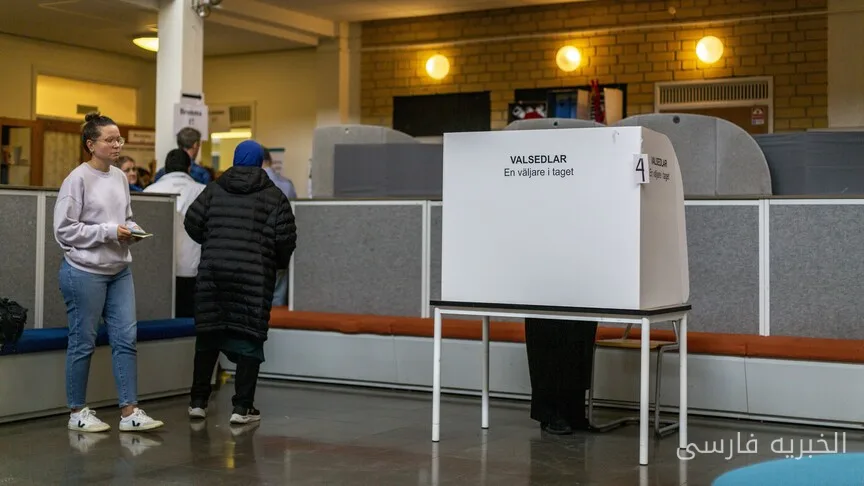
The recent elections in Sweden have become one of the closest and most controversial political contests in the country's history. Preliminary results indicate that the far-right party may enter the government, raising significant concerns among the public and political observers.
Deep Changes in the Political Structure
The Sweden Democrats, recognized as a far-right party, are currently positioning themselves as a key player in Sweden's political future by securing a significant number of votes in the elections. This party, which had previously been marginalized due to its extreme and unconventional positions, may now play a vital role in forming the government.
As the election results are extremely close, analysts believe that the far-right's entry into power could bring about a wave of social and economic changes. Fears of rising racism and extremism in Swedish society, particularly among minorities, are among the main concerns that have emerged following these elections.
The Future of Sweden in a Fog of Uncertainty
Given the close results and the possibility of forming various coalitions, Sweden's political future is shrouded in uncertainty. International observers are also closely monitoring the developments and looking to assess the potential impacts of this election on Sweden's foreign and domestic policies. If the far-right party comes to power, it could have wide-ranging implications for Sweden's relations with other countries, especially in the areas of immigration and human rights.
Thus, Sweden stands on the brink of a major transformation, and the political future of the country is heavily dependent on the final election results. Analysts and citizens must wait and see whether the far-right can achieve its demands or not.