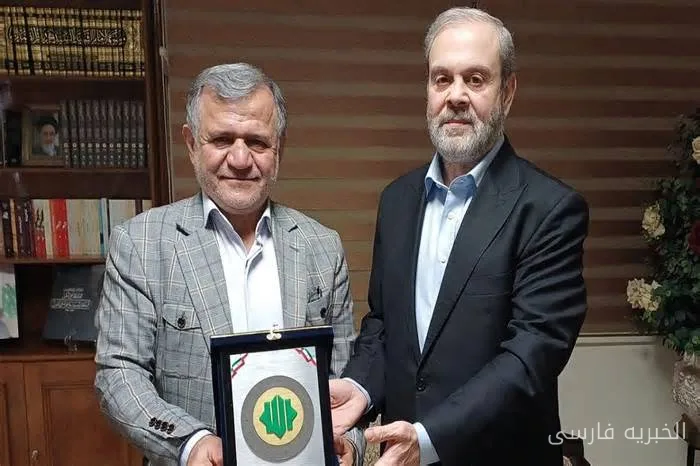
In a significant and strategic meeting, the Secretary-General of the Islamic Coalition Party discussed with Sayyid Abdullah Safi al-Din, the Head of Hezbollah's Office in Lebanon in Tehran. This meeting not only helps strengthen the relationship between the two political entities but could also have considerable impacts on the cooperation between the two countries in various fields.
New Agreements on Cooperation
In this meeting, the two sides agreed on the continuation of delegation exchanges and cooperation in various areas. This agreement clearly demonstrates the willingness of both parties to expand relations and interactions. The Secretary-General of the Islamic Coalition Party emphasized the necessity of strengthening cooperation in economic, cultural, and political fields, while Sayyid Abdullah Safi al-Din also highlighted the importance of these collaborations for resistance and addressing common challenges.
This meeting takes place at a time when the Middle East is affected by various political and economic crises. On the other hand, closer cooperation between different parties and groups could lead to enhanced stability and security in the region.
Political and Social Dimensions
Analysts believe that this type of interaction can be seen as a positive indicator for the future of relations between the two countries. This agreement could strengthen the resistance front and create a powerful bloc against common challenges. Additionally, such collaborations could also have positive social and cultural consequences, as they could lead to the exchange of ideas and experiences in various fields.
Establishing a cooperation network between the Islamic Coalition Party and Hezbollah in Lebanon, as two powerful entities in the political arena, could aid in the continuity and expansion of relations between the two countries. This type of informal diplomacy and closer relations could serve as a new model for political interactions in the region.
Ultimately, it should be noted that this meeting was not just an ordinary political session, but could be considered a turning point in the relations between Iran and Lebanon. Given the current regional conditions and external pressures, this type of interaction could help strengthen the positions of both countries against international challenges.