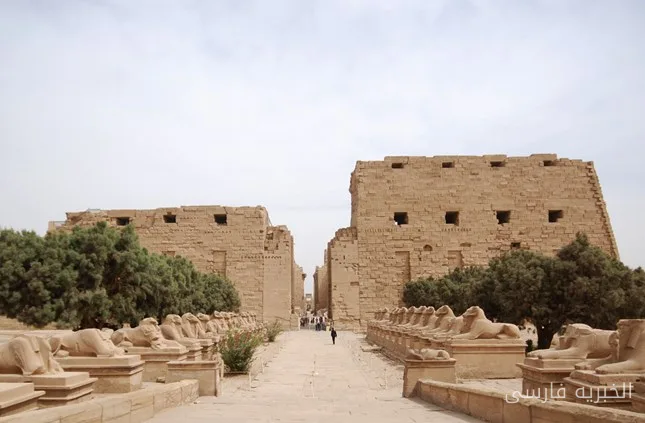
The specialized scientific committee in Egypt, located in Luxor, has recommended that the sections used to complete the Ramses II statue, which is located in front of the second pylon of the Karnak temple complex, be reviewed. The committee has also suggested that the possibility of separating the restored section above the statue's base be examined, provided it is determined that this action will not affect the main part of the statue.
Review of Inconsistencies
This recommendation comes after a comprehensive study by the committee on the statue, which reveals inconsistencies in the type and color of some blocks used in the restoration compared to the original sections of the statue. Additionally, the committee has suggested that laboratory analyses be conducted on samples taken from the base of the statue, which is still in its original position, and that these samples be compared with samples of the blocks used in the restoration. This action is intended to confirm whether the blocks belong to the same statue; if the results do not match, those pieces will be set aside as having no confirmed connection to the statue.
Read more: Mysterious Explosions on the Shores of Minab: What Happened to This Area?
Recommendations for Statue Preservation
This study also shows inconsistencies in the anatomical proportions of the restored section; its dimensions exceed the natural proportions of the statue. Therefore, the committee has recommended that a scientific study be conducted to assess the possibility of separating this section while ensuring the preservation of the main part and preventing any damage to it.
The committee has also requested that specialists at the archaeological site search for missing pieces of the statue, including the upper part of the crown and a section of the foot, and examine each of these found pieces to confirm that they belong to the statue. If the main missing parts are not found, an archaeological study will be conducted to determine their possible shape and proportions, and thereafter, an archaeological feasibility assessment for completing the statue will be carried out in accordance with the international laws and conventions governing restoration work.
The conclusion of this study indicates that completing the statue is not feasible; therefore, the discovered archaeological pieces will be preserved and stored, and instead of being used in speculative restoration, they will be maintained.
Read more: Discovery of the Most Colorful Tomb of Ancient Egypt: Secrets of 4400 Years Revealed · Discovery of an Ancient Table in Hama, Syria: A Taste and Aroma of 4500 Years!